
SEO, or search engine optimization, is the practice of improving your website to rank higher in search results and attract more organic traffic. This guide is perfect for business owners, marketers, and anyone wanting to boost their online visibility without spending money on ads.
Getting found online isn’t optional anymore—it’s essential for growing your business and reaching customers who are actively searching for what you offer. We’ll break down the main types of SEO strategies you can use, from optimizing your website’s technical foundation to creating content that answers your audience’s questions. You’ll also discover the real benefits that make SEO worth your time and investment, plus simple ways to track if your efforts are actually working.
Understanding SEO Fundamentals
Definition and Core Principles of Search Engine Optimization
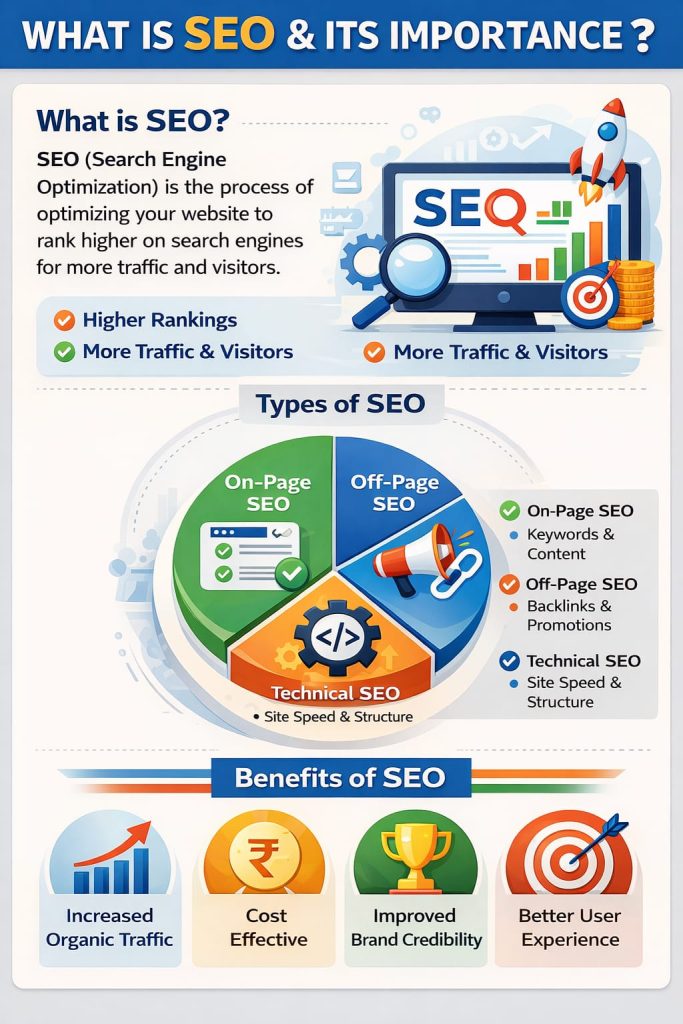
Search Engine Optimization (SEO) is the practice of improving your website’s visibility when people search for products or services related to your business on search engines like Google, Bing, and Yahoo. Think of it as making your website more attractive and understandable to both search engines and users.
The core principles revolve around three main pillars: relevance, authority, and user experience. Relevance means your content matches what people are searching for. Authority refers to how trustworthy and credible your website appears to search engines, often measured through quality backlinks and expertise. User experience encompasses everything from page loading speed to mobile-friendliness and content quality.
SEO operates on the fundamental belief that search engines want to provide the best possible results to their users. Your job is to prove that your content deserves to rank highly by meeting both technical requirements and user expectations.
How Search Engines Discover and Rank Content
Search engines use automated programs called crawlers or spiders to discover web pages across the internet. These bots follow links from one page to another, continuously building an index of available content. When someone performs a search, the engine quickly scans this massive index to find the most relevant results.
The ranking process involves complex algorithms that evaluate hundreds of factors to determine which pages should appear first. Google’s algorithm considers elements like:
1.Content quality and relevance to the search query
2.Page loading speed and technical performance
3.Mobile optimization and responsive design
4.Backlink profile and domain authority
5.User engagement signals like click-through rates and time spent on page
6.Content freshness and regular updates
Search engines also personalize results based on the searcher’s location, search history, and device type, making the ranking process even more nuanced.
Key Components That Influence Search Visibility
Several critical components work together to determine how well your website performs in search results:
On-Page Elements:
Title tags that accurately describe your content
Meta descriptions that entice users to click
Header tags (H1, H2, H3) that structure your content
Internal linking that connects related pages
Image optimization with descriptive alt text
Technical Factors:
Site speed and Core Web Vitals performance
SSL certificates for secure connections
XML sitemaps that guide search engine crawlers
Clean URL structure that’s easy to understand
Mobile responsiveness across all devices
Content Quality:
Keyword research and strategic placement
Content depth and comprehensive coverage
Regular updates and fresh information
User intent matching with search queries
Off-Page Signals:
Quality backlinks from reputable websites
Social media mentions and engagement
Local citations for location-based businesses
Brand mentions across the web

Why SEO Matters for Your Business Success
Increased organic traffic drives more qualified leads
When your website ranks higher in search results, you attract visitors who are actively searching for exactly what you offer. These aren’t random clicks from people who stumbled across your site by accident. They’re potential customers who typed specific keywords because they need your products or services right now.
The beauty of organic search traffic lies in its intent. Someone searching for “plumber near me” or “best accounting software for small business” has already identified their problem and is looking for a solution. When your website appears at the top of their search results, you’re meeting them at the perfect moment in their buying journey.
Studies show that organic search results receive significantly more clicks than paid advertisements. People trust organic rankings more, viewing them as endorsements from search engines rather than purchased placements. This trust translates into higher-quality leads who are more likely to engage with your content, stay longer on your site, and convert into customers.
Cost-effective marketing with long-term returns
Unlike paid advertising where you pay for every single click, SEO works like a compound investment. Once you’ve optimized your content and earned those rankings, they continue generating traffic without ongoing per-click costs. Your blog post that ranks on page one today can drive traffic for months or even years without additional investment.
Compare this to pay-per-click advertising, where your traffic stops the moment you stop paying. A well-optimized website page that cost you $500 to create and optimize might generate thousands of dollars in leads over its lifetime. The initial investment in quality content, keyword research, and technical optimization pays dividends long after the work is complete.
Small businesses particularly benefit from this aspect of SEO. While they might not have the budget to compete with larger companies in paid advertising, they can often outrank them through focused, high-quality content that serves their specific audience better.
Enhanced brand credibility and trust building
Appearing on the first page of Google search results sends a powerful message about your business. People unconsciously associate higher search rankings with industry authority and trustworthiness. When potential customers see your website consistently appearing for relevant searches, they begin to recognize your brand as a leader in your field.
This credibility extends beyond just rankings. SEO best practices naturally align with creating better user experiences. Fast-loading pages, mobile-friendly designs, clear navigation, and valuable content all contribute to positive first impressions. Visitors who find your site easy to use and full of helpful information are more likely to view your business as professional and reliable.
Search engines also reward websites that demonstrate expertise, authority, and trustworthiness through their content and structure. This means that good SEO practices help you build the very qualities that customers look for when choosing who to do business with.
Competitive advantage in digital marketplace
Every day your competitors aren’t investing in SEO is another day you can get ahead of them in search rankings. The businesses that start optimizing their websites early often maintain their advantage for years because established rankings become increasingly difficult to displace.
SEO creates barriers to entry that protect your market position. Once you’ve earned top rankings for important keywords in your industry, competitors must work much harder to outrank you. They need to create better content, build more authority, and essentially prove to search engines that they deserve to take your spot.
The data you gather from SEO efforts also provides competitive intelligence. You’ll discover which keywords drive the most valuable traffic, what content resonates with your audience, and how customers actually search for businesses like yours. This insight helps you make smarter decisions across all your marketing efforts, not just SEO.

Essential Types of SEO Strategies
On-page optimization for content and technical elements
On-page SEO focuses on optimizing individual web pages to rank higher and earn more relevant traffic. This involves fine-tuning both visible content and behind-the-scenes technical elements that search engines analyze when determining page quality and relevance.
Content optimization starts with strategic keyword placement in titles, headers, and throughout your text. Your page title should include your primary keyword while remaining compelling to readers. Meta descriptions, though not direct ranking factors, influence click-through rates and should summarize your content with relevant keywords. Header tags (H1, H2, H3) create a logical content hierarchy that helps both users and search engines understand your page structure.
Technical on-page elements include optimizing images with descriptive alt text, creating clean URL structures that reflect your content, and ensuring fast page loading speeds. Internal linking connects related pages on your site, distributing page authority and helping visitors discover more content. Schema markup provides additional context to search engines about your content type, whether it’s a product, review, or local business listing.
Off-page tactics for authority and link building
Off-page SEO encompasses activities that happen outside your website but impact your search rankings. The primary focus centers on building domain authority through high-quality backlinks from reputable sources.
Link building strategies vary in approach and difficulty. Guest posting on industry-relevant blogs allows you to share expertise while earning valuable backlinks. Creating shareable content like infographics, research studies, or comprehensive guides naturally attracts links from other websites. Digital PR campaigns that get your brand mentioned in news articles or industry publications provide both exposure and authoritative links.
Social signals and brand mentions contribute to your overall online presence. While social media shares don’t directly impact rankings, they increase content visibility and potential for earning organic links. Unlinked brand mentions across the web signal to search engines that your business has real-world recognition and authority.
Local SEO tactics for businesses include managing Google Business Profile listings, encouraging customer reviews, and building citations on local directories. These activities establish geographic relevance and trustworthiness for location-based searches.
Technical SEO for website performance and structure
Technical SEO addresses the foundation that supports all other optimization efforts. Without proper technical implementation, even the best content struggles to rank effectively.
Website architecture plays a crucial role in both user experience and search engine crawling. A logical site structure with clear navigation helps search engines understand your content hierarchy. XML sitemaps guide crawlers to important pages, while robots.txt files control which areas of your site should be indexed.
Core Web Vitals have become essential ranking factors, measuring loading performance, interactivity, and visual stability. Page speed optimization involves compressing images, minimizing code, leveraging browser caching, and using content delivery networks. Mobile responsiveness ensures your site works seamlessly across all devices, as mobile-first indexing is now standard.
Crawlability issues can prevent search engines from properly indexing your content. Common problems include broken links, redirect chains, duplicate content, and crawl errors. Regular technical audits identify these issues before they impact rankings. Structured data implementation helps search engines understand your content context, potentially earning rich snippets in search results.

Key Benefits That Transform Your Online Presence
Higher Search Engine Rankings Boost Visibility
When your website climbs the search engine rankings, you’re essentially moving from the back corner of a massive library to the front window display. Most people never scroll past the first page of Google results, which means ranking on page two or three is like being invisible online. SEO transforms your digital presence by pushing your content toward those coveted top positions where customers actually look.
Higher rankings create a snowball effect for your brand awareness. The websites that appear at the top of search results automatically gain more credibility in users’ minds, even before they click through. This psychological advantage, called the “halo effect,” makes people trust top-ranking sites more than those buried deeper in the results.
Improved User Experience Increases Engagement
SEO isn’t just about pleasing search engines – it’s about creating websites that people actually want to use. When you optimize your site structure, improve loading speeds, and organize content logically, you’re making life easier for every visitor who lands on your pages.
Fast-loading pages keep people from bouncing away in frustration. Clean navigation helps visitors find what they’re looking for without getting lost in a maze of confusing menus. Mobile-friendly designs ensure your content looks great whether someone’s browsing on their phone during lunch or on their laptop at home.
Search engines reward these user-friendly improvements with better rankings because they want to send people to websites that provide value. Your engagement metrics – time spent on site, pages per visit, and bounce rate – all improve when visitors can easily navigate and consume your content.
Better Conversion Rates Generate More Revenue
SEO brings you the right kind of traffic – people who are actively searching for what you offer. Unlike traditional advertising that interrupts people’s day, SEO connects you with customers who are already in buying mode. Someone searching for “best running shoes for flat feet” has clear purchase intent compared to someone randomly seeing a shoe ad on social media.
This targeted approach naturally leads to higher conversion rates. When your content matches what people are specifically looking for, they’re more likely to take action – whether that’s making a purchase, signing up for your newsletter, or requesting a quote.
Quality SEO also helps you capture customers at different stages of their buying journey. You can create content for people just starting their research and also target those ready to make immediate purchases. This comprehensive approach maximizes your revenue potential from organic search traffic.
Long-Lasting Results Compound Over Time
Unlike paid advertising that stops delivering results the moment you stop spending money, SEO builds momentum that can last for months or even years. A well-optimized piece of content can continue attracting visitors and generating leads long after you published it.
Think of SEO as planting seeds in a garden rather than buying cut flowers. The initial investment takes time to show results, but once your content starts ranking well, it can provide consistent value without ongoing costs. Many businesses see their organic traffic continue growing months after implementing SEO improvements.
This compounding effect makes SEO incredibly cost-effective over time. While you might spend money upfront on optimization, the long-term return on investment often exceeds other marketing channels because your content keeps working for you 24/7.
Enhanced Local Presence Attracts Nearby Customers
Local SEO transforms how nearby customers discover your business. When someone searches for “coffee shop near me” or “dentist in downtown,” proper local optimization puts your business directly in front of people who can actually walk through your doors.
Local search results often include maps, business hours, phone numbers, and customer reviews – giving potential customers everything they need to choose you over competitors. This immediate access to key information removes friction from the decision-making process.
Reviews and local citations also build trust within your community. When people see consistent business information across multiple directories and positive reviews from local customers, they feel more confident choosing your business over others.
Measuring SEO Success and Performance
Essential Metrics to Track Your Progress
Organic Traffic Growth stands as your primary indicator of SEO success. Monitor how many visitors find your site through search engines each month. A steady upward trend signals that your optimization efforts are paying off, while sudden drops might indicate algorithm changes or technical issues that need immediate attention.
Keyword Rankings reveal where your pages appear in search results for target terms. Track both branded and non-branded keywords across different geographic locations. Focus on ranking improvements for high-value keywords that directly relate to your business goals, not just vanity metrics.
Click-Through Rates (CTR) from search results show how compelling your titles and meta descriptions are. Low CTR despite good rankings suggests your snippets need optimization. Industry averages hover around 2-3% for most positions, with top results achieving 10-30%.
Conversion Rates from organic traffic measure the quality of your SEO efforts. High traffic means nothing without conversions, whether that’s sales, leads, or other desired actions. Compare organic conversion rates to other traffic sources to assess SEO’s true value.
Bounce Rate and Dwell Time indicate content quality and user satisfaction. Search engines interpret these signals when determining rankings. Pages with high bounce rates might need better content alignment with search intent.
Page Loading Speed directly impacts both user experience and search rankings. Google’s Core Web Vitals have made site speed a crucial ranking factor, making regular monitoring essential.
Tools for Monitoring Search Engine Rankings
Google Search Console provides free, direct insights from Google itself. This platform shows which queries bring traffic to your site, average positions, impressions, and clicks. The Performance report reveals your actual search visibility, while the Coverage report identifies indexing issues that could hurt rankings.
SEMrush and Ahrefs offer comprehensive rank tracking across multiple search engines and locations. These paid tools provide competitor analysis, keyword difficulty scores, and historical ranking data. They excel at tracking large keyword portfolios and identifying ranking opportunities your competitors might miss.
Google Analytics connects SEO performance to business outcomes. Set up goals and conversion tracking to see which organic keywords and pages generate the most valuable traffic. The Acquisition reports break down organic performance by landing page, geographic location, and device type.
Rank tracking tools like AccuRanker or SERPWatcher provide daily ranking updates and automated reporting. These specialized platforms excel at monitoring ranking fluctuations and can alert you to sudden changes that require investigation.
Local SEO tools such as BrightLocal or Whitespark become essential for businesses with physical locations. They track local pack rankings, monitor Google My Business performance, and manage local citations across directories.
ROI Calculation Methods for SEO Investments
Revenue Attribution requires connecting organic traffic to actual sales or leads. Set up conversion tracking in Google Analytics to see which organic keywords and pages generate revenue. Calculate the total revenue from organic traffic over a specific period and compare it to your SEO investment costs.
Lead Value Calculation works for businesses that don’t sell directly online. Determine your average lead-to-customer conversion rate and customer lifetime value. Multiply organic leads by these metrics to estimate SEO’s revenue impact.
Cost Per Acquisition (CPA) from SEO typically runs much lower than paid advertising. Calculate your total SEO costs (tools, content, technical work) divided by the number of customers acquired through organic search. Compare this to your paid advertising CPA to demonstrate SEO’s efficiency.
Long-term Value Assessment recognizes that SEO builds lasting assets. Unlike paid ads that stop generating traffic when you stop paying, optimized pages can attract visitors for years. Factor this compounding effect into your ROI calculations by projecting future traffic and revenue from current SEO investments.
Competitive Advantage Metrics measure market share gains. Track how your organic visibility compares to competitors using tools like SEMrush’s Market Explorer. Increased search visibility often translates to market share growth, even if direct revenue attribution proves challenging.
Brand Awareness Impact includes metrics like branded search volume increases and direct traffic growth, which often result from improved search visibility but don’t show up in organic traffic reports.

Conclusion
SEO isn’t just a marketing buzzword – it’s the foundation that helps your website get found by people who are actually looking for what you offer. From technical tweaks behind the scenes to creating content that answers real questions, each type of SEO strategy works together to build your online visibility. The benefits go way beyond just getting more website visitors; you’re talking about better user experience, increased credibility, and sustainable growth that doesn’t disappear when you stop paying for ads.
Getting started with SEO might feel overwhelming, but remember that every small improvement adds up over time. Focus on creating genuinely helpful content for your audience, make sure your website loads quickly and works well on mobile, and keep track of what’s actually working through simple analytics tools. The businesses that treat SEO as a long-term investment rather than a quick fix are the ones that see real, lasting results in their online success.